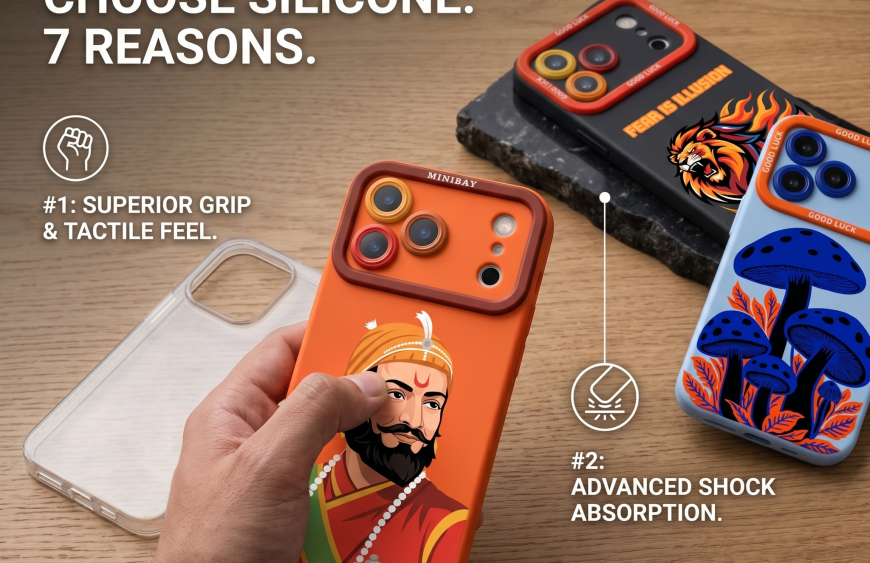
Picking the wrong iPhone case is a mistake you only make once — usually right after your phone hits the floor. With so many options filling the market, the silicone case vs plastic debate keeps coming up for good reason. Both materials look similar on a shelf, but the moment something goes wrong, the difference becomes painfully clear.
This guide breaks down exactly why a silicone case wins — backed by real-world performance, user experience, and material science. Whether you need an iPhone 17 cover, an iPhone 17 Pro cover, an iPhone 17 Pro Max cover, or an iPhone 17 Air cover, choosing the right case material is the smartest decision you can make before you ever need it. Every option is available at MiniBay, where fit and finish are guaranteed for each model.
What is the Difference Between a Silicone iPhone Case and a Plastic iPhone Case?
A silicone case is crafted from a soft, flexible polymer that stretches without tearing, grips without sticking, and absorbs shock rather than transferring it. A plastic case — typically made from polycarbonate or ABS — is rigid by nature, built to hold its form under pressure rather than flex with it.
Does a Silicone iPhone Case Actually Protect Your iPhone Better Than Plastic?
Yes — and the reason goes deeper than material softness alone. When your iPhone takes a fall, impact energy radiates outward from the point of contact through whatever surrounds it. A silicone case compresses on contact, spreading that force across a wider surface area before it reaches the device. This process significantly reduces the concentrated shock that causes cracked screens and damaged corners.
Does a Silicone iPhone Case Protect Your iPhone from Drops?
Every time your iPhone falls, gravity delivers the same force — but not every case responds the same way. A silicone case with reinforced corner padding compresses on impact, creating a cushioning layer that slows the shock wave travelling toward your screen and internal components. Corners absorb the most damage in real-world drops, making that corner reinforcement the most important protection feature a silicone case can offer.
Drop testing of mobile accessories consistently shows that silicone case-protected devices sustain far less visible damage than those in rigid plastic covers — particularly from counter height and above. For users of the larger, heavier iPhone 17 Pro Max cover, this shock-absorption advantage becomes even more critical, as greater device mass amplifies the impact energy transferred to the frame on every fall.
Is a Silicone iPhone Case Better Than Plastic for Grip?
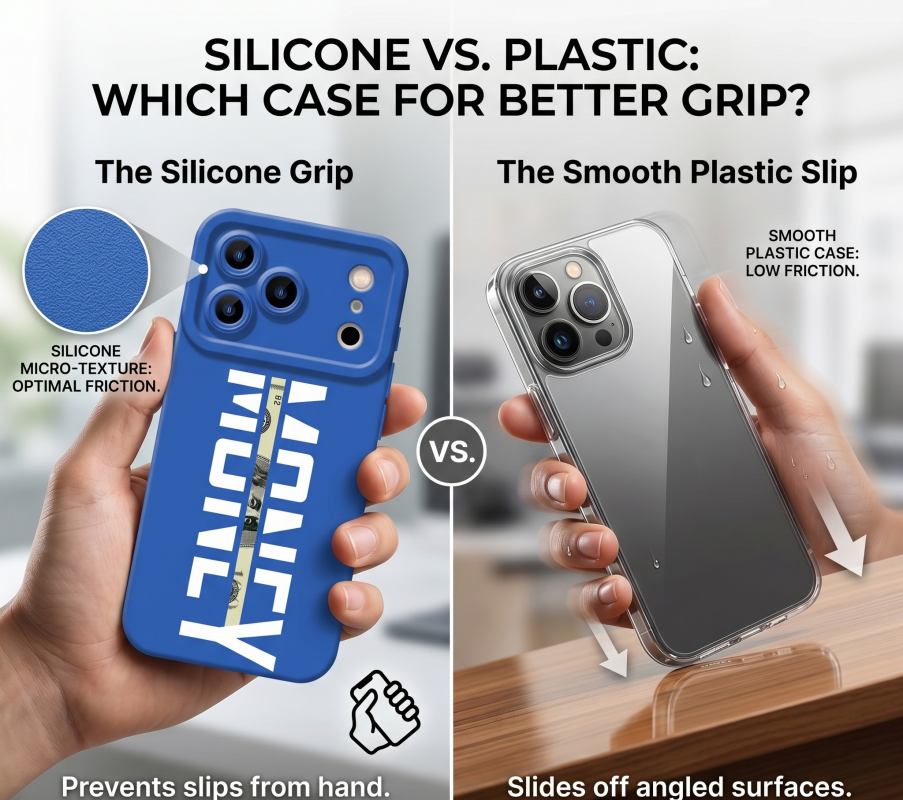
Grip is one of the most underrated factors in case selection — until your device slides off a table or slips from your hand mid-call. A silicone case features a micro-textured surface that creates consistent friction against skin, fabric, and smooth surfaces, making it far less likely to slip during one-handed use, while commuting, or when set down on angled surfaces.
Does a Silicone iPhone Case Feel Better Than a Hard Plastic Case?
Ask anyone who has used both, and the answer is consistent: a silicone case simply feels better. The softness is warm and yielding — it responds to the natural shape of your hand rather than resisting it. A hard plastic case, by contrast, tends to feel cold on initial contact and inflexible throughout extended use, which contributes to hand fatigue during longer sessions.
This iPhone 17 Pro Cover also eliminates the creaking and stress sounds that many plastic cases develop after weeks of regular use. For users who carry their phone in a pocket or hold it for hours daily, the tactile comfort of a silicone case delivers a genuine quality difference that builds over time.
Is Silicone or Hard Plastic Better for an iPhone Case?
This is one of the most searched comparisons in the iPhone accessories space — and the answer depends on how you use your phone. Hard cases offer structural rigidity, resistance to deep surface scratches, and transparent finishes that display the device’s design. For users who prioritise aesthetics or rarely drop their phone, a hard plastic case serves its purpose.
Do Silicone Cases Get Scratched or Damaged More Easily?
A silicone case does attract lint and can develop light surface scuffs with heavy daily use — that is a fair trade-off to acknowledge. However, surface marks on a silicone case behave very differently from scratches on plastic. Marks on it are typically shallow impressions in the outer layer; most wipe away cleanly with a damp cloth and mild soap.
Are Silicone iPhone Cases Waterproof or Water-Resistant?
No standard iPhone case provides full waterproofing without a sealed underwater housing — but a silicone case offers better everyday moisture resistance than a plastic case. The material is hydrophobic by nature, meaning it repels surface water rather than allowing it to spread or seep through. Splashes, light rain, and damp-handed use are all handled well by a well-fitted silicone case.
Which iPhone Case Material Offers the Best Protection?
When measuring all common case materials — silicone, polycarbonate, TPU, leather, and hybrid builds — a silicone case consistently scores highest for practical, all-round everyday protection. Here is how the main options compare:
Silicone case leads in grip, impact absorption, and comfort. It fits tightly, lasts well under daily stress, and handles routine drops without cracking or losing structural integrity.
Hybrid cases combine the rigidity of polycarbonate with the cushioning of a silicone case or TPU, offering strong, rugged protection — but at the cost of added bulk and weight.
Will a Silicone Case Make Your iPhone Too Bulky?
Bulk is a fair concern, especially for users coming from a bare device or an ultra-slim wallet cover. The reassurance is this: a well-engineered silicone case adds very little. Most quality options add just 1.5 to 3mm around the device — barely perceptible in the hand yet sufficient to absorb genuine real-world impact.
This is especially relevant for the ultra-slim iPhone 17 Air cover market. The iPhone 17 Air was built with slimness as a design priority, and a properly fitted cover preserves that slim profile completely while adding the grip and protection the device genuinely requires in daily use.
Are Silicone iPhone Cases More Eco-Friendly Than Plastic?
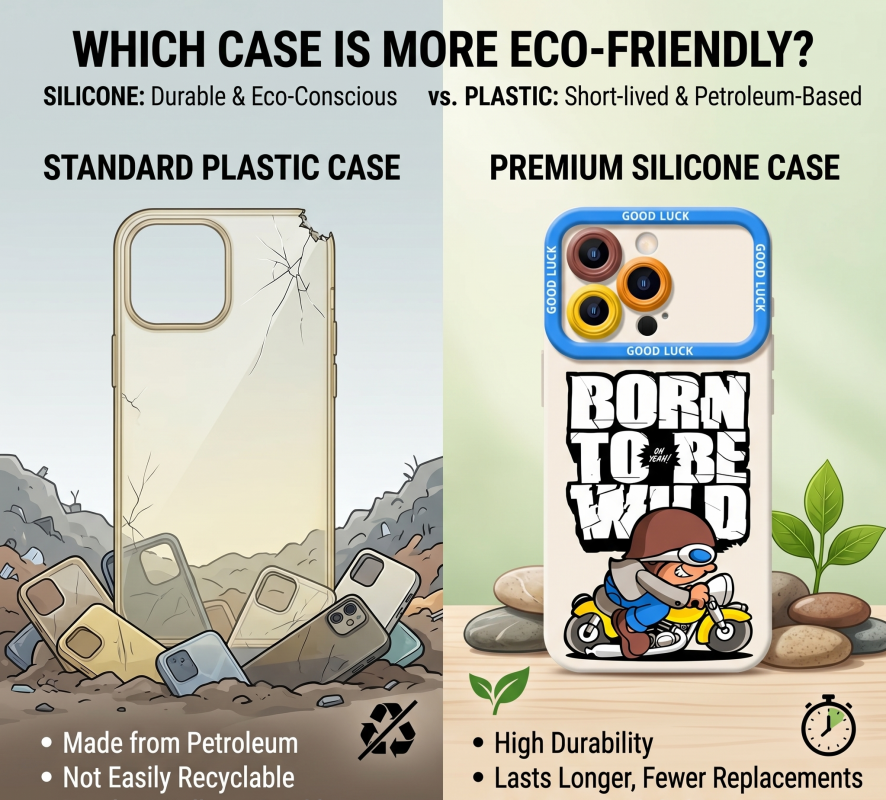
Environmental considerations now drive more purchasing decisions than at any point before — and a silicone case holds a clear advantage over standard plastic here. Most plastic cases are made from petroleum-derived materials and are not recyclable at standard collection points, contributing to persistent landfill waste each time one is discarded.
A silicone case is typically more durable, meaning it needs replacing far less often than a plastic case that cracks or chips. Many of these covers are also manufactured without BPA or phthalates, and a growing range of manufacturers now produce them from plant-derived or partially recycled compounds.
What Do iPhone Users Say About Silicone vs Plastic Cases?
Across user review platforms and smartphone communities, a silicone case earns consistent praise for grip, comfort, and protective performance. The most common complaints about a plastic case centre on slipperiness, cracking under stress, and a cheap feel that does not match the premium device it is supposed to protect.
What Should You Look for When Buying a Silicone iPhone Case?
Before purchasing a silicone case, run through these practical criteria to make the right call:
- Wall thickness: A silicone case with at least 1.5mm wall thickness provides meaningful impact resistance without noticeable bulk.
- Microfibre inner lining: Protects your iPhone’s glass back and metal frame from internal friction abrasion.
- Raised camera and screen lips: Elevated edges on a silicone case keep the lens and display off flat surfaces when the phone is set down.
- Precise button covers: A quality silicone case maintains clear, responsive tactile feedback through moulded button covers.
How Do You Choose the Right iPhone Case for Your Lifestyle?
Do you drop your phone regularly?
Choose a cover with reinforced corner cushioning and a raised screen lip for maximum daily protection.
Do you work outdoors or near water?
Option for a silicone cover with tight port coverage and hydrophobic properties to handle splashes and damp working conditions.
What is your budget?
MiniBay carries silicone case options across a wide price range — from everyday protection through to premium finishes — all perfectly sized for each iPhone 17 variant.
Should You Switch From a Plastic to a Silicone iPhone Case?
If you use your iPhone every day — and most people do — your silicone case is something you interact with hundreds of times over the life of the device. It delivers on every metric that shapes that experience: grips better, feels better, absorbs impact better, and outlasts a standard plastic case in long-term daily use.